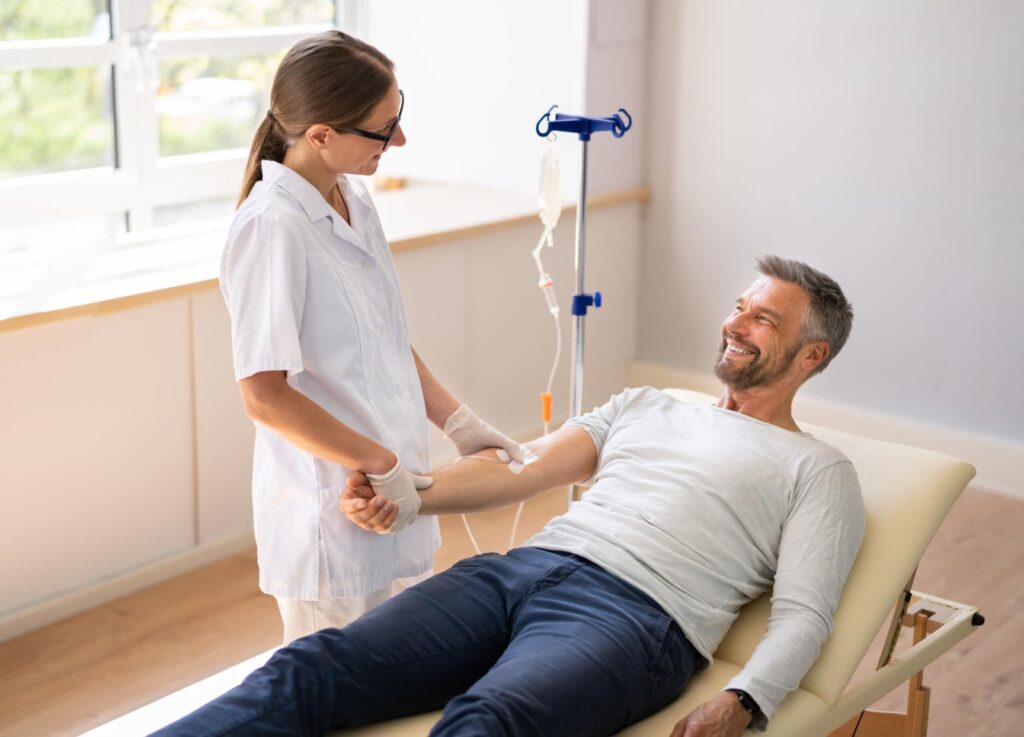
Ketamine infusion therapy combined with Ketamine-Assisted Psychotherapy (KAP) is an advanced, evidence-based treatment for individuals suffering from treatment-resistant depression, PTSD, anxiety, bipolar depression, and chronic suicidality.
Unlike standard antidepressants that may take weeks to work, ketamine infusions often provide rapid symptom relief, while KAP integrates structured psychotherapy to help patients process insights, reinforce behavioral change, and sustain long-term clinical improvement.
At Lighthouse Psychiatry, our Arizona-based program combines:
Ketamine infusion therapy with psychotherapy is clinically supported for:
While ketamine alone can rapidly reduce symptoms, Ketamine-Assisted Psychotherapy enhances durability, meaning, and emotional integration, leading to better long-term outcomes.
Benefits of KAP include:
This combination represents the gold standard in modern interventional psychiatry.
When delivered by trained medical professionals, ketamine is FDA-approved as an anesthetic and widely used off-label in psychiatry with strong safety data. At Lighthouse Psychiatry, we adhere to:

FAQ
Is ketamine FDA approved for depression?
Ketamine is FDA-approved as an anesthetic and used off-label for depression. Esketamine (Spravato) is FDA-approved for treatment-resistant depression.
How fast does ketamine therapy work?
Many patients report improvement within hours to days after the first infusion.
How many ketamine treatments are needed?
Most protocols involve 6–8 initial infusions followed by maintenance.
Does insurance cover ketamine infusion therapy?
Coverage varies. Our team assists with reimbursement options and financing.
What is KAP therapy?
Ketamine-Assisted Psychotherapy integrates psychotherapy before and after ketamine sessions to enhance psychological outcomes.

Ketamine is a safe medication that has been widely used for decades since 1970s as an anesthetic in both children and adults.
Not unlike other anesthetics, ketamine has been used illegally for recreational use. Abuse of ketamine can be very dangerous and potentially lethal, as is the case with alcohol and narcotic medications.
That said, when used responsibility by trained clinicians, ketamine can be an extremely valuable option with a wide safety margin to treat a diverse range of conditions, including depression, anxiety, PTSD, trauma, OCD, pain, and suicidal ideation. In fact, the doses used for treatment of psychiatric and mental disorders are well below what is generally used for surgical procedures to anesthetize a patient.
Biochemically, ketamine interacts with the NMDA receptor to produce anesthetic effects. It interacts with DA receptors to reduce dopamine deficiency in brain circuits involving the hippocampus and other brain nuclei. Addition, it interacts with the AMPA receptor to produce antidepressant effects.
Although the specific mechanism of action of ketamine is still not fully understood by scientists and researchers, it is collectively believed ketamine targets gene expression and protein manufacture in certain important brain pathways or circuits, rather than directly targeting neurotransmitters. It rapidly activates a biochemical pathway associated with synaptic plasticity, the mTOR pathway, by increasing expression of a gene encoding the protein BDNF, which gets the m-TOR pathway going. Hence, activation of this pathway leads to increased number of new synapses in targeted brain regions leading to global restoration of brain synapses, both structurally and functionally, that may have been damaged by a chronically ill brain.
Ketamine infusion is an OFF-LABEL treatment solution. Hence, ketamine infusion treatment is not covered by insurance.
< For more detailed information about Spravato and how it works, you can visit the FDA’s official page on Spravato.
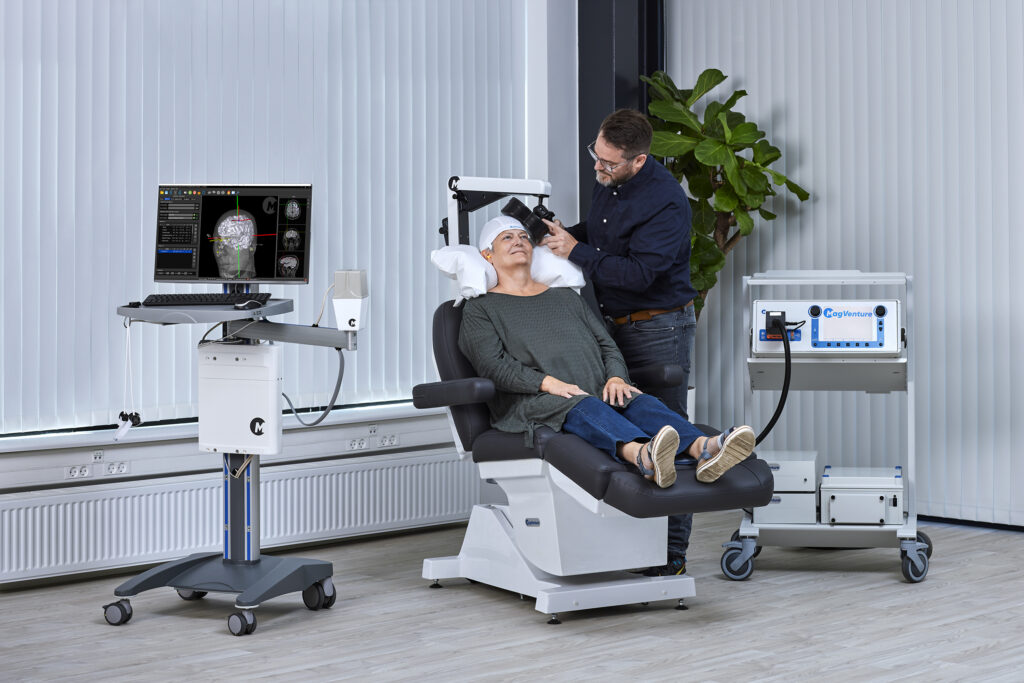
Combined Transcranial Magnetic Stimulation (TMS) and Ketamine Infusion Therapy represents one of the most advanced treatment strategies in modern interventional psychiatry for patients with treatment-resistant depression (TRD), PTSD, bipolar depression, and severe mood disorders.
By pairing the neuroplastic effects of ketamine with the targeted neuromodulation of TMS, this integrated approach addresses both biochemical and circuit-level dysfunction, leading to faster, deeper, and more durable clinical outcomes.
At Lighthouse Psychiatry in Arizona, our protocol is physician-led, evidence-informed, and personalized to each patient’s neuropsychiatric profile.
Individually, both therapies are effective. Together, they offer synergistic benefits that exceed either treatment alone.
Combined Advantages:
This dual-modality approach is increasingly recognized as a next-generation standard for severe or complex depression.
Combined therapy is clinically applied for:
Neuropsychiatric assessment, prior treatment review, and safety screening.
Protocols may include:
Non-invasive, FDA-cleared stimulation targeting depression-related cortical circuits.
IV ketamine administered in a monitored medical setting to rapidly reduce depressive symptoms and enhance plasticity.
Outcome tracking, relapse prevention, and long-term planning.
This advanced protocol is typically recommended for patients who:
At Lighthouse Psychiatry, combined TMS and ketamine therapy is delivered with:
Both therapies are widely studied and considered safe when administered by trained specialists.
FAQ
Is it safe to combine TMS and ketamine?
Yes. When medically supervised, this combination is considered safe and increasingly used for refractory depression.
Which works first: TMS or ketamine?
Protocols vary. Some patients receive ketamine first to reduce symptoms rapidly, followed by TMS for stabilization.
Does insurance cover combined treatment?
TMS is often covered by insurance. Ketamine infusion coverage varies. Our team assists with preauthorization and payment options.
How long do results last?
Many patients experience sustained improvement when TMS stabilization is paired with ketamine maintenance.
Is this better than TMS alone?
For severe or refractory cases, combined therapy often produces more robust and durable outcomes.