If you or someone you love has been living with PTSD and traditional treatments just haven’t cut it, you’ve probably heard people talking about ketamine. Maybe your doctor mentioned it. Maybe you read something online. Either way, you want real answers — not hype, not fear-mongering. Just the facts. That’s exactly what this post is about.
Let’s break down what the clinical evidence actually says about ketamine for PTSD, how it works in the brain, who it’s right for, and what a treatment program looks like here in Arizona.
First, Let’s Talk About PTSD — and Why So Many People Are Still Suffering
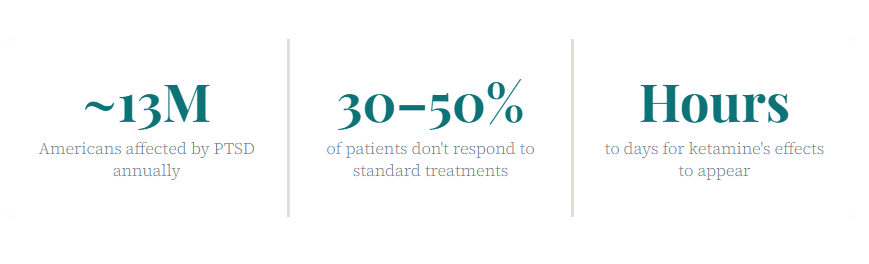
Post-Traumatic Stress Disorder affects roughly 13 million Americans every year. It’s not just a veteran’s issue — PTSD can follow car accidents, childhood abuse, assault, natural disasters, or even the quiet trauma of years of emotional neglect. The symptoms — nightmares, hypervigilance, emotional numbness, flashbacks, avoidance — can be absolutely debilitating.
The current first-line treatments? Therapy (especially trauma-focused CBT and EMDR) and antidepressants like SSRIs and SNRIs. For many people, these work well. But for a significant portion — estimates suggest 30% to 50% of PTSD patients — standard treatments provide only partial relief or none at all. That’s a lot of people living in a constant state of survival mode.
This treatment gap is exactly why researchers and psychiatrists have been looking at ketamine so seriously over the past decade. And the results? They’re genuinely exciting.
So What Is Ketamine, Actually?
Ketamine has been around since the 1970s, originally developed as a surgical anesthetic. It’s been used safely in hospitals around the world — in children and adults — for over 50 years. When you hear about ketamine being misused recreationally, that’s a very different context than what happens in a monitored clinical setting.
In psychiatric medicine, the doses used are significantly lower than anesthetic doses, and the setting is carefully controlled. Think: a calm, comfortable infusion room, medical monitoring equipment, and trained professionals by your side the whole time.
📋 Clinical Note
Ketamine is currently FDA-approved as an anesthetic and is used off-label for psychiatric conditions like PTSD and depression. Esketamine (Spravato) — a closely related compound — is FDA-approved specifically for treatment-resistant depression. Many ketamine infusion programs operate under well-established off-label protocols backed by a growing body of clinical research.
How Does Ketamine Work for PTSD? The Neuroscience (Made Simple)
Here’s where things get really fascinating. Most conventional antidepressants target serotonin, dopamine, or norepinephrine — the classic neurotransmitters. Ketamine takes a completely different route.
Ketamine primarily works by blocking NMDA receptors, which are involved in glutamate signaling — the brain’s most abundant excitatory neurotransmitter system. By doing this, ketamine rapidly kickstarts a cascade of neurological changes that standard medications simply can’t replicate.
Neuroplasticity: The Real Magic
One of ketamine’s most remarkable effects is its ability to increase BDNF (Brain-Derived Neurotrophic Factor) — essentially, a protein that helps your brain grow and repair connections. PTSD can literally shrink and damage certain brain regions over time (particularly the hippocampus and prefrontal cortex). Ketamine activates the mTOR signaling pathway, which rapidly increases the formation of new synapses in these areas.
Think of it this way: PTSD can trap trauma memories in a kind of neural rut. Ketamine may help the brain become more flexible — more capable of forming new patterns, processing old memories differently, and breaking free from those deeply entrenched fear responses.
“Ketamine’s ability to rapidly restore synaptic connections in stress-affected brain circuits makes it one of the most promising treatments we’ve seen for trauma-related disorders in a generation.”— Emerging consensus in interventional psychiatry literature
Additionally, ketamine interacts with dopamine receptors to address deficiencies in brain circuits involving the hippocampus and other key regions — areas directly implicated in how we process and store traumatic memories.
What Does the Clinical Evidence Actually Show?
Let’s get into the research. The evidence base for ketamine in PTSD has been building steadily, and the results are hard to ignore.
Key Clinical Findings
- Rapid symptom reduction: Multiple controlled studies have shown significant reductions in PTSD symptom severity — including intrusion, avoidance, and hyperarousal — within 24 hours of a single ketamine infusion. This speed is unmatched by any other psychiatric medication.
- Randomized controlled trials: A landmark 2014 study published in JAMA Psychiatry found that a single ketamine infusion produced significantly greater PTSD symptom reduction compared to midazolam (an active placebo). The results were both statistically and clinically meaningful.
- Combat veterans and first responders: Studies involving military personnel with PTSD have shown robust responses to ketamine, including reductions in suicidal ideation — one of the most dangerous aspects of the disorder.
- Chronic suicidal ideation: Ketamine consistently demonstrates rapid antisuicidal effects, which is critically important given the elevated suicide risk in PTSD patients.
- Comorbid depression: Most PTSD patients also live with depression. Ketamine addresses both simultaneously — a significant clinical advantage over treatments that target only one condition.
- Multiple infusion protocols: While a single infusion can bring relief, research supports that a series of 6–8 infusions produces more durable outcomes, especially when combined with structured psychotherapy.
It’s worth being honest here: the research is still evolving. Most studies have been relatively small or short-term. Long-term maintenance, optimal dosing, and the best ways to sustain ketamine’s effects are still active areas of investigation. But the signal is clear enough that leading psychiatric centers across the country — including programs right here in Arizona — have integrated ketamine into their standard of care.
Why Ketamine-Assisted Psychotherapy (KAP) Changes the Game
Here’s something important that often gets lost in the ketamine conversation: the infusion itself is only part of the picture. The real power comes when you combine ketamine with structured psychotherapy — an approach called Ketamine-Assisted Psychotherapy (KAP).
Ketamine creates a window of increased neuroplasticity — a period when the brain is literally more open to change, insight, and new patterns. If you can do meaningful therapeutic work during or around that window, the results are far more durable than ketamine alone.
🔬 Why KAP Matters for PTSD
PTSD often involves deeply encoded fear memories and maladaptive beliefs about safety, self-worth, and the world. Ketamine alone can provide relief, but KAP helps patients process those insights — integrating them into lasting behavioral change, reducing relapse, and building genuine resilience. It’s the difference between a window opening and actually walking through it.
Research consistently shows that combining ketamine with psychotherapy produces better outcomes than either approach alone — including improved emotional processing, greater insight, lower relapse rates, and more sustained relief.

Who Is a Good Candidate for Ketamine Therapy?
Ketamine treatment isn’t for everyone, and a thorough psychiatric evaluation is essential before starting. Generally, ketamine therapy tends to be most appropriate for people who:
- Have PTSD that hasn’t responded adequately to two or more standard treatments (medications, therapy, or both)
- Experience significant depression alongside their PTSD symptoms
- Are dealing with chronic suicidal ideation and need rapid stabilization
- Have tried SSRIs, SNRIs, or other antidepressants without sufficient benefit
- Want a treatment approach that addresses trauma at a neurological level, not just symptom management
People with certain medical conditions, a history of psychosis, or active substance use disorders may not be appropriate candidates. That’s why a thorough screening and evaluation process is so important — and why it’s critical to work with a qualified psychiatric team rather than an unvetted ketamine clinic.
What Does Ketamine Treatment Look Like at Lighthouse Psychiatry?
At Lighthouse Psychiatry — with locations in Gilbert and Scottsdale, Arizona — ketamine therapy isn’t just an infusion you show up for and go home. It’s a comprehensive, individualized program built around your specific neuropsychiatric profile.
Here’s how the process typically unfolds:
- Step 1 – Comprehensive Psychiatric Evaluation: A board-certified psychiatrist reviews your history, current symptoms, prior treatments, and medical background. You’ll receive a personalized diagnosis and treatment plan before anything else happens.
- Step 2 – Personalized Protocol Design: Dosing, infusion frequency, and psychotherapy integration are customized to your needs — not a one-size-fits-all approach.
- Step 3 – Medical-Grade Ketamine Infusions: Infusions are administered in a controlled, monitored environment with continuous vital sign monitoring and in accordance with Arizona clinical standards.
- Step 4 – KAP Integration Sessions: Licensed psychotherapists trained in KAP work with you before and after infusions to help you process insights, reinforce change, and build long-term resilience.
- Step 5 – Maintenance & Outcome Tracking: Standardized symptom scales, relapse prevention planning, and long-term support keep your progress on track.
For patients with particularly complex or treatment-resistant presentations, Lighthouse Psychiatry also offers combined TMS (Transcranial Magnetic Stimulation) + Ketamine therapy — a next-generation dual-modality approach that addresses both biochemical and circuit-level dysfunction simultaneously. Research increasingly supports this combination for producing faster, deeper, and more durable outcomes in severe PTSD and depression.
Core Service
Ketamine Infusion Therapy
Medical-grade IV ketamine in a monitored setting, tailored to your specific neuropsychiatric needs.
Core Service
Ketamine-Assisted Psychotherapy (KAP)
Structured therapy is integrated before and after infusions to maximize insight, integration, and lasting change.
Advanced Option
TMS + Ketamine Combined
Synergistic dual-modality approach for treatment-resistant PTSD and complex mood disorders.
Complementary Care
EMDR & ART Trauma Therapy
Evidence-based trauma therapies are available alongside ketamine treatment for whole-person healing.
Is It Safe? The Honest Answer
This is the question people ask most — and it deserves a straight answer. Yes, ketamine therapy delivered by trained medical professionals in a clinical setting is considered safe. The evidence supports this across decades of use as an anesthetic and years of use in psychiatric medicine.
At clinical doses used in psychiatric treatment (well below anesthetic doses), serious adverse events are rare. Common side effects during an infusion can include dissociation, mild perceptual changes, nausea, and elevated blood pressure — all of which are monitored and managed in real time.
The key words here are trained professionals and an appropriate setting. Ketamine misused outside a clinical context is dangerous. Ketamine administered by a board-certified psychiatry team in a medically equipped facility? The risk-benefit profile is very favorable for the right patient.
“When used responsibly by trained clinicians, ketamine can be an extremely valuable option with a wide safety margin to treat a diverse range of conditions.”— Lighthouse Psychiatry Clinical Team
A Few Things Worth Knowing Before You Start
- Ketamine infusion is an off-label treatment, which means it’s generally not covered by insurance. However, the Lighthouse Psychiatry team assists with reimbursement and financing options.
- Most protocols involve 6–8 initial infusions, followed by maintenance sessions as needed. Some patients respond powerfully to fewer.
- Results aren’t always immediate for everyone. While many patients report improvements within hours to days, the full therapeutic benefit often develops over several treatments.
- KAP is not just a bonus add-on — it’s considered the gold standard approach for maximizing and sustaining ketamine’s effects.
- This is not a standalone cure. Ketamine works best as part of a comprehensive psychiatric care plan that may include ongoing therapy, lifestyle factors, and follow-up care.
◆
The Bottom Line
The clinical evidence for ketamine in PTSD is real, growing, and increasingly hard to dismiss. For people who have tried conventional treatments without finding relief, ketamine — particularly when paired with structured psychotherapy — represents a genuinely different kind of hope. Not a miracle, not a shortcut, but a biologically grounded, rapidly acting intervention that can help a brain stuck in trauma mode find its way back.
If you’re in Arizona and you’re ready to have an honest conversation about whether ketamine therapy is right for you, the team at Lighthouse Psychiatry is here for exactly that.
Take the Next Step
You Don’t Have to Keep Living With Untreated PTSD
Lighthouse Psychiatry offers personalized ketamine therapy programs in Gilbert and Scottsdale, AZ — backed by board-certified psychiatric oversight and a team that genuinely cares about your recovery.
Start as a New Patient → Ask Us a Question
Medical Disclaimer: This blog post is for informational purposes only and does not constitute medical advice. Ketamine therapy is an off-label treatment and is not appropriate for everyone. Please consult a board-certified psychiatrist to determine if ketamine is right for your specific situation. If you are in crisis, please call or text 988 (Suicide & Crisis Lifeline) immediately.